
About Me
I'll ask about your real Tuesday, not your ideal one.
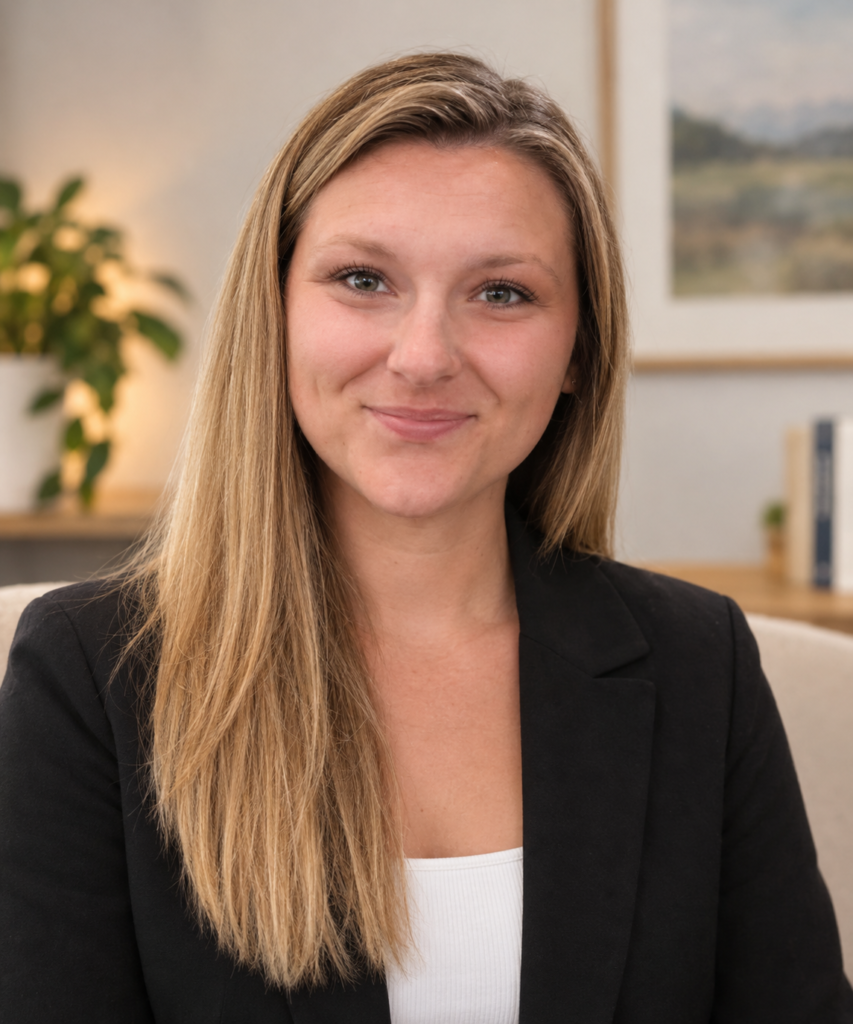
I’m Alexandra Coutts-MacNeil, a Registered Behaviour Analyst (RBA), regulated by the College of Psychologists and Behaviour Analysts of Ontario (CPBAO). I started Cusp because I kept meeting people — teens, adults, self-identified and formally diagnosed alike — who’d been told to just try harder, get more organized, care more. None of that ever explained why some days felt impossible and others didn’t.
That’s part of why “Cusp” felt like the right name for this. In behaviour analysis, a cusp is a small, specific change that opens the door to something much bigger — new skills, new environments, new possibilities that weren’t accessible before. That’s the work I actually do: not fixing what’s “wrong” with you, but finding the specific shift that changes what’s possible next.
As a neurodivergent adult and a parent of two, I don’t just teach these strategies. They’re how my own household runs. They’re what gets my kids out the door on school mornings, what gets all of us to the rink on time for Sunday morning hockey, and what helps us through the sensory overload of bulky gear, tight skates, and a loud, crowded change room. I know firsthand that these tools work in real, messy, everyday life, not just on paper. That’s the experience I bring to every family I work with. If your mornings feel like a daily battle, I can help you build routines that actually fit your family.
My Approach
Every brain gets here differently, so the work looks different for everyone. Instead of a fixed program, we start by understanding your specific patterns — what actually happens when a task feels impossible, where your systems break down, what’s already working that we can build on. Then we pick one or two things that would make the biggest difference for your life. From there, we build strategy together: practical, specific, and built around how your brain actually operates, not how a textbook says it should. Between sessions you’ll try things out in real life, and we’ll adjust based on what happens. Progress is measured by what’s working for you, not by a perfect routine.
Why Cusp is different
Too often, the systems meant to help treat neurodivergence as something to fix. Goals are set by the practitioner, pulled from a standard list of skills someone “should” have, and measured against a neurotypical idea of how things are supposed to be done. What matters to the person actually living that life gets lost. At Cusp, you set the goals. If it matters to you, it matters here.
Understanding my brain made me kinder to it. I stopped worrying about what my house looks like and started putting things where I actually use them: drop stations, duplicates everywhere, lists in plain sight even when guests come over, a laundry basket that sorts as clothes come off, and at least five phone chargers around the house. Small changes, big difference.
Cusp is for the middle group: people who were missed, people who aren’t considered “severe enough” for funded supports, and adults who don’t need a diagnosis but want life to be easier. In behaviour analysis, a behavioural cusp is a new skill that opens the door to new places, people and possibilities. I believe we’re always on the cusp of something. My hope is that you leave accepting who you are, able to explain and advocate for what you need, and with systems that make room for more joy and less stress.
Most executive function support in Ontario right now comes from two places: unregulated coaching, or clinical psychology. Cusp sits deliberately in between.
- Regulated, not just experienced. As a CPBAO-registered RBA, I’m held to professional standards of practice, ethics, and ongoing oversight — the same regulatory framework that governs psychologists in Ontario.
- Practical, not just diagnostic. I’m not here to diagnose you. I’m here to build the actual systems, strategies, and understanding that make daily life work better — starting wherever you already are, diagnosed or not.
- Collaborative, not clinical. You’re not a case to manage. We partner on this together, and the strategies we build are yours to keep, not dependent on ongoing sessions forever.
Who I work best with
- Teens and adults who are diagnosed or self-identified as ADHD, Autistic or AuDHD
- Women and teen girls whose struggles were missed or dismissed for years
- Parents, grandparents and other caregivers who want calmer, more predictable days at home
- People who are ready to try things out and tell me honestly what works